

Introduction
Our CMO clients started asking us the same question this quarter, and they were all asking because their boards had asked them first.
“How are we showing up in ChatGPT? In Claude? In Google’s AI Overviews?”
Not “how much AI traffic are we getting.” That question is a year old. The new question is upstream. When a patient asks an AI answer engine about a condition or a doctor in their market, does our platform show up in the answer? What are we ranking for? What are our competitors ranking for that we aren’t?
And every CMO I talk to already knows what happens next. If they don’t walk in with an answer, some associate is going to pull a report from a tool nobody has heard of, and now they’re defending a number they didn’t make.
We’ve watched this play out at three different platforms this year already. That’s why we spent the last quarter evaluating every serious AI search visibility tool we could get access to.
1. Why Traffic Reports Miss the Point
Reporting on AI-source traffic is table stakes now. Sessions from ChatGPT, Claude, Google AI Overviews, Copilot referrers. Useful, but it’s downstream, and it’s going to miss more and more over time.
The reason is simple. In a traditional Google result, the click was the whole point. In an AI answer, the click is optional. The searcher often gets their answer inside the AI response and never leaves. Your platform can be the source ChatGPT cited to a patient in Denver, and your website may never see a session out of it. The patient’s question got answered. Your traffic report is blank.
The meaningful metric is no longer “how many people came from AI.” It’s “how often are we the answer, and in which markets, and for which questions.” None of the traditional SEO tools were built to measure that.
2. What We Looked At
We ran a proper evaluation on five tools this quarter. Peec.ai, SEMRush’s AI visibility features, Otterly.ai, Profound, and Scout by Yext.
Otterly.ai
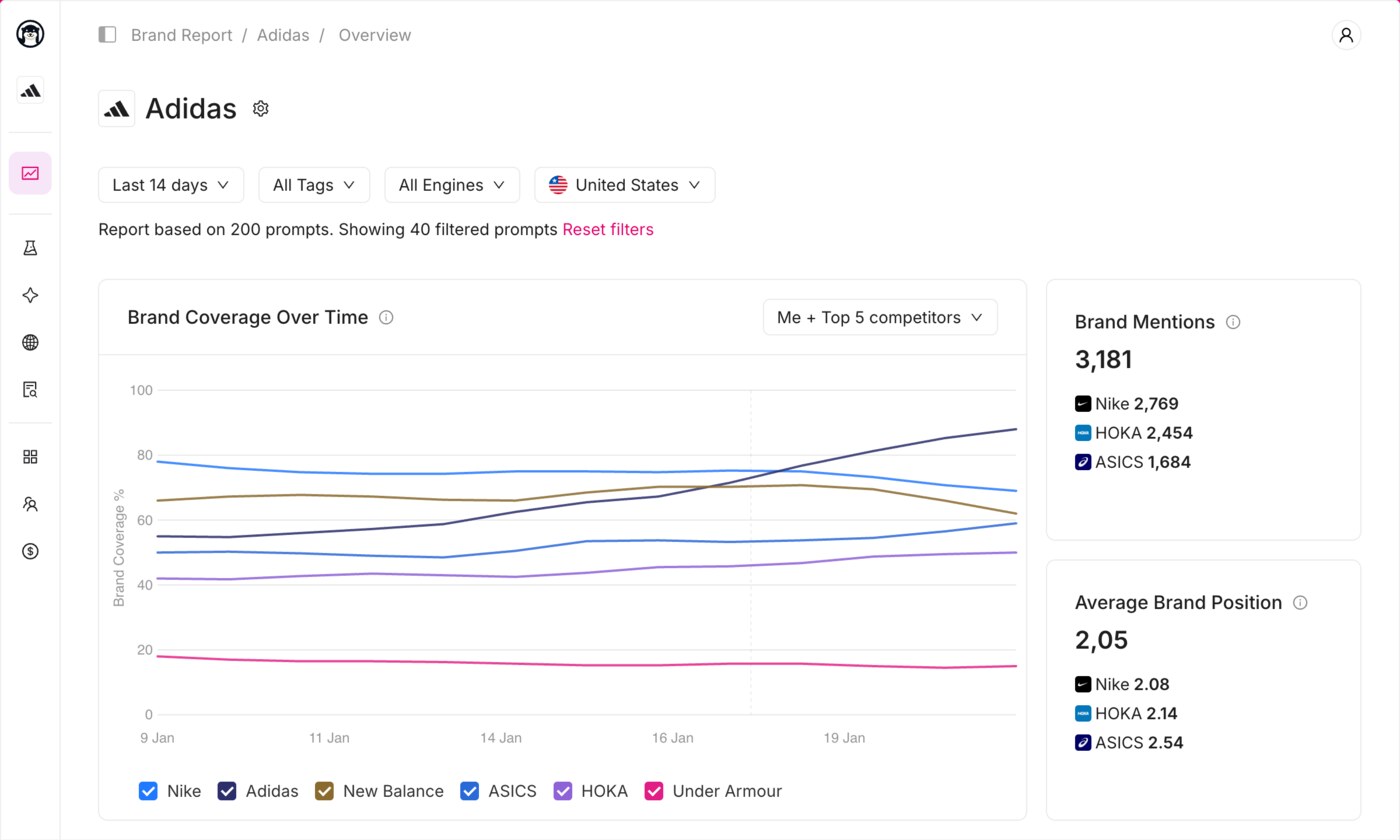
Otterly.ai is the cleanest of the ones that only do this one thing. Good UI, honest reporting on which prompts trigger a client to be cited across ChatGPT, Perplexity, and AI Overviews. For a single-brand DTC company, it’s a real option. Not built for location-level tracking.
Profound
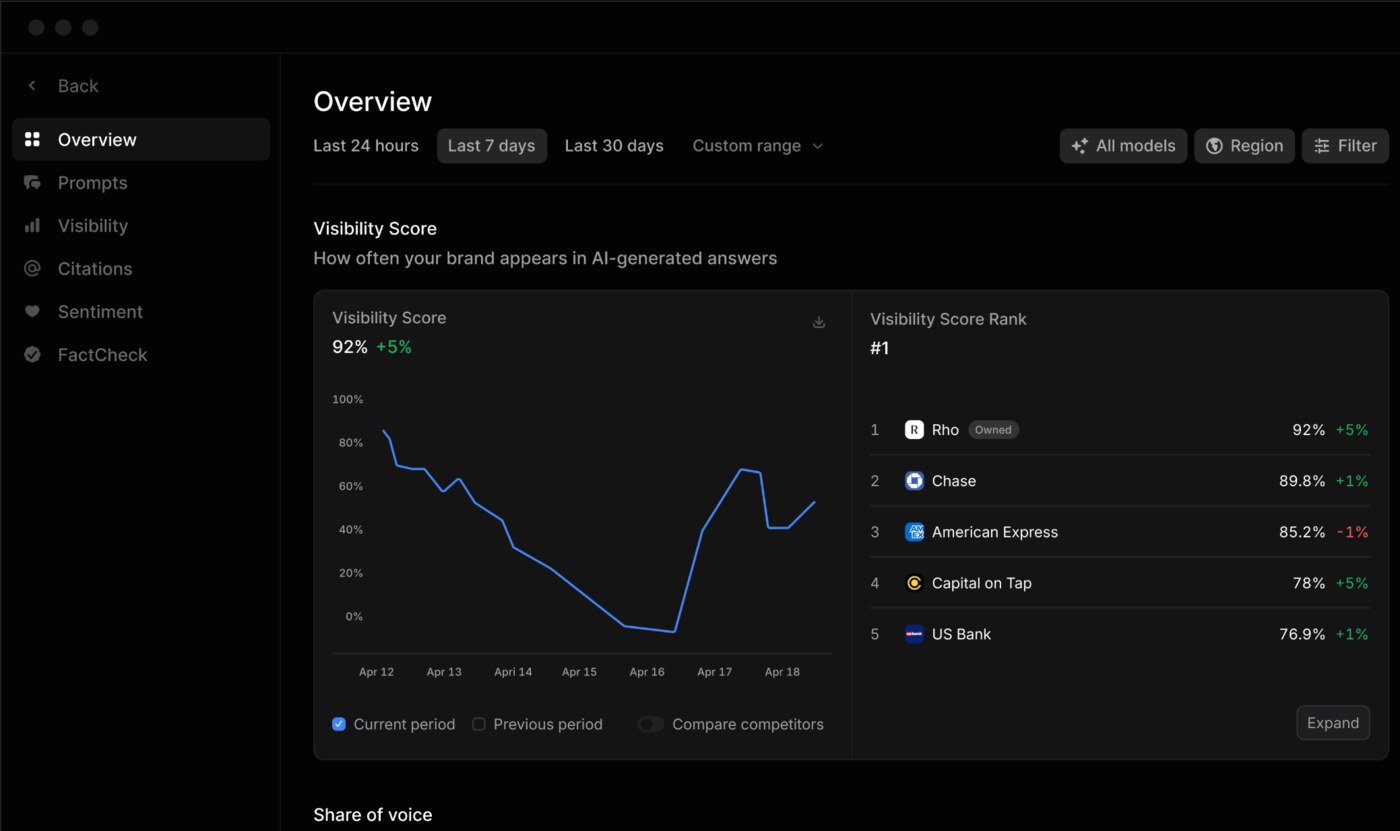
Profound is the enterprise-grade option. Real methodology, real dashboards, real price tag. This is where the Fortune 500 teams are landing. For our clients, the math doesn’t work yet and it’s not built for multi-location local search.
Peec.ai
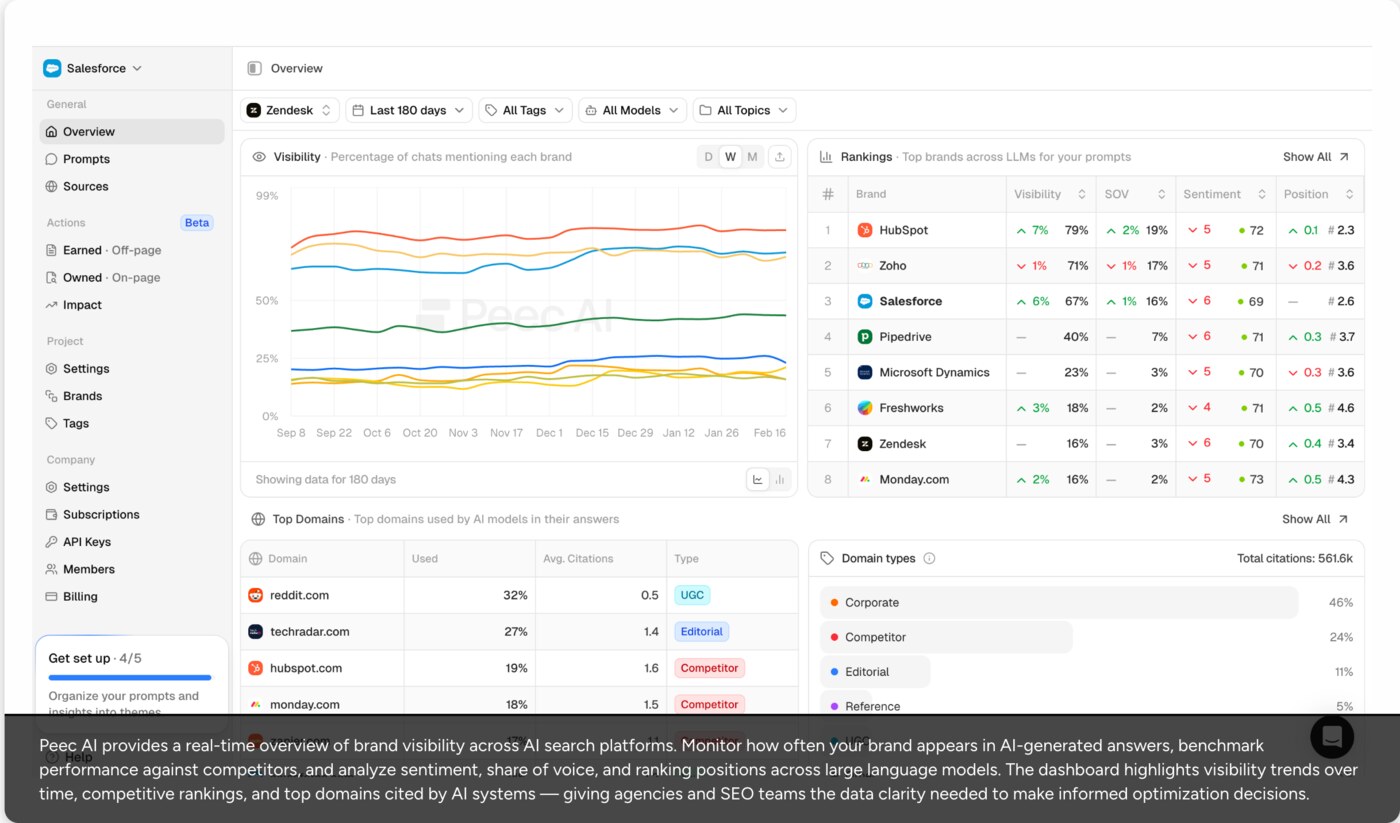
Peec.ai is a good product for a specific job. If you know exactly which queries you want to rank for — “dentist in Nashville,” “pediatric orthodontist Charlotte” — Peec gives you real tools to work toward that ranking. Content briefs, structured data recs, site update prompts. The gap for us was the discovery side. Peec is optimized for measuring the terms you told it to measure, not for surfacing the terms you’re already ranking for without knowing it. For a platform running across a dozen specialties and a hundred markets, that discovery gap matters.
SEMRush
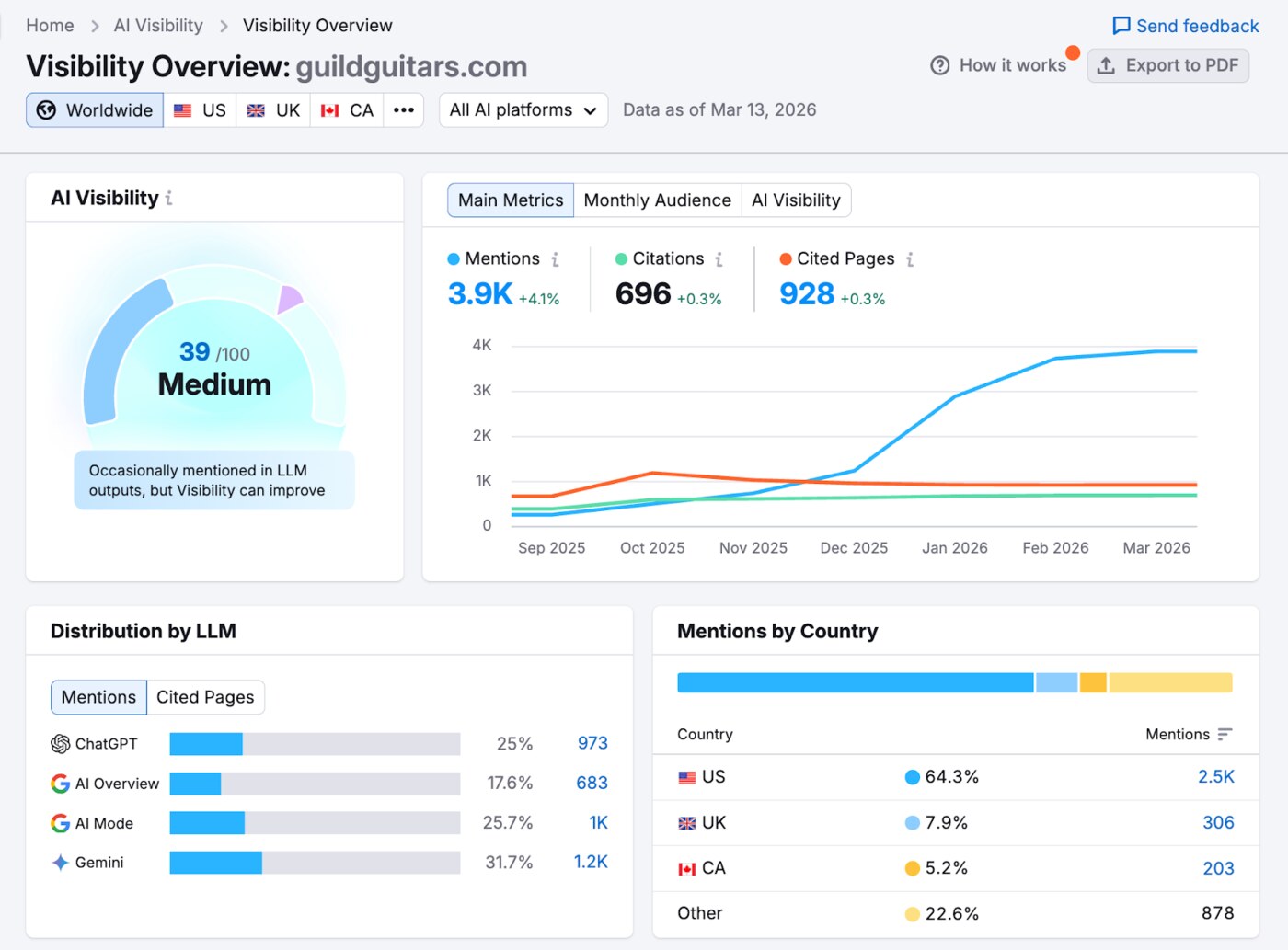
SEMRush bolted AI visibility onto a platform most healthcare marketers already pay for. Every AI ranking is reported as a national number. Whether “dermatology group” ranks in the average ChatGPT answer nationally tells me nothing about whether our Charlotte practice shows up when a Charlotte patient actually asks. The tool has AI features. It’s not built for local.
Scout by Yext
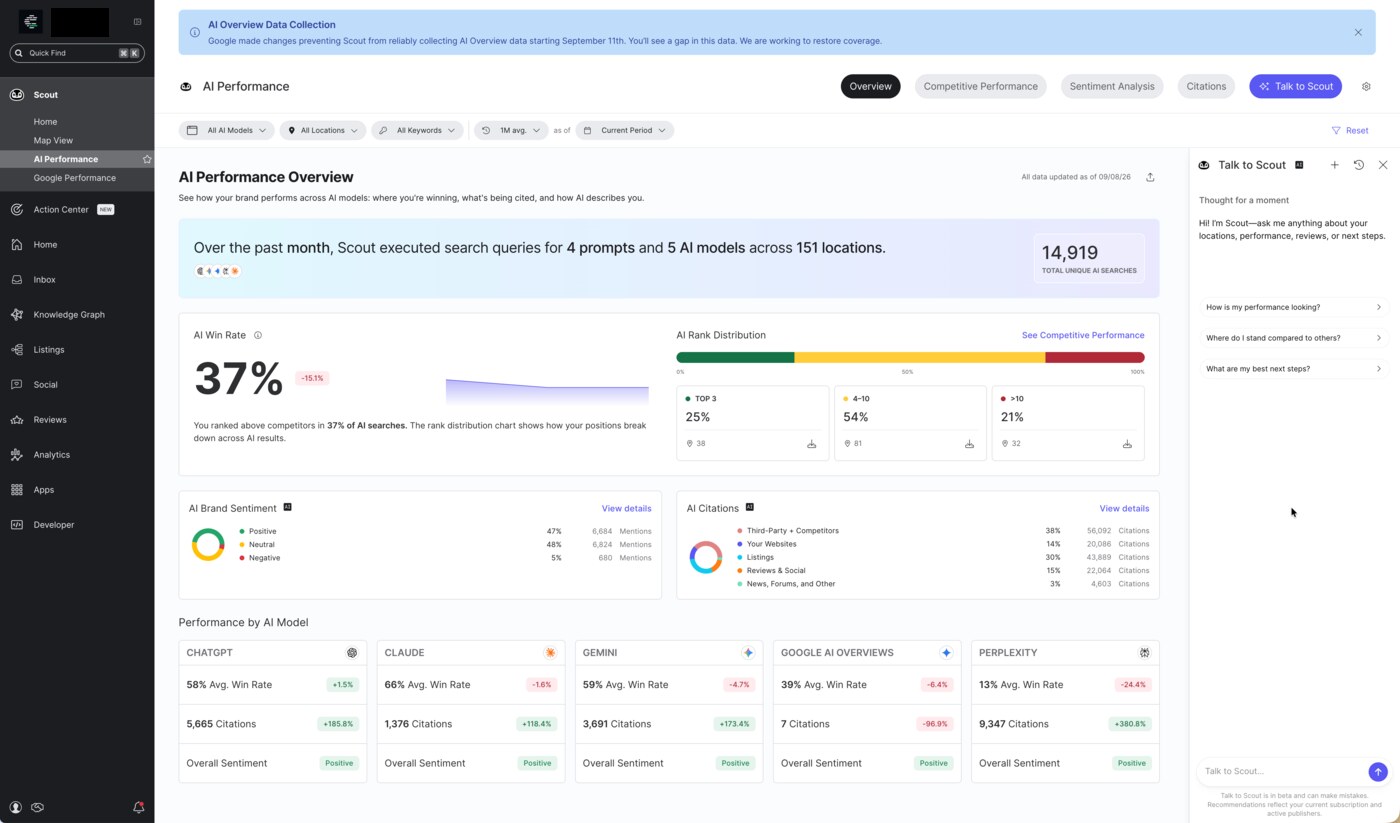
Scout by Yext is the one we standardized on. Two reasons. First, it’s local-first. Scout measures AI rankings per location, in the specific markets where a client’s practices actually operate. If you’re showing up in Charlotte and losing in Raleigh, that’s a real operational finding a national number would have hidden. Second, Scout tracks competitors on that same per-location basis. Which competitors are winning in Nashville, in Denton, in Denver. That’s the report a board actually wants to see and the report almost no other tool can produce.
3. What We Are Actually Reporting Now
Here’s the stack we settled on for a PE-backed multi-location platform.
-
01
Share of AI answers, per market.
For a defined query set — the ten to fifteen queries a specialty actually converts on — what percentage of AI answers in a given metro include our client versus the competitor set. Reported per location, not rolled up to a national average.
-
02
Movement, month over month.
Not the absolute number in isolation. The delta. Whether we’re gaining, holding, or losing ground in a given market. Boards care about direction as much as position.
-
03
Competitor benchmarks, per location.
Which competitor is winning in which market, and by how much. This is the section that gets forwarded internally. It also funds the next SEO project, because it turns “we should invest in Charlotte” into “we are losing to a named competitor in Charlotte by 40 points and the fix is roughly this.”
-
04
Gap analysis on your defined query set.
Scout is very good at showing you where you’re missing on the queries you told it to track. Which locations are winning, which are losing, which competitor is taking the answer. That’s the report the board wants, and that’s where most of the value is.
-
05
Traditional AI-source traffic, as a footnote.
Still worth reporting. But framed as the downstream effect, not the headline metric. The headline metric is the answer share. Traffic is what happens when the answer share is working.
“You may see vendors talk about discovering the queries you didn’t plan for. In practice, every tool on the market including Scout works from a defined prompt set. If your set is bad, your report is bad. Spend the time up front to build a good one.”
What differs is how each tool helps you build that set. Some pull from real AI conversation data, some from Google Search Console, some from Reddit and competitor keywords. But the workflow is the same: you define, you track, you gap analyze.
4. The Monday Morning Version
If your platform doesn’t yet have an AI visibility report on the standing board deck, here’s what to do next.
-
01
Pick your query set.
Fifteen queries. The ones that convert to appointments in your top specialty. Intent queries, not brand queries. Think about how a patient would actually type or speak the question. For a dermatology platform, that looks like “best dermatologist near me for acne,” “mohs surgeon in Charlotte,” “how much does a mole removal cost.” Not “dermatology” and not your brand name. The queries that get someone off the couch and onto a schedule.
-
02
Pick your market set.
The metros where you have three or more locations and already spend on paid media. That’s where the reporting pays off first.
-
03
Pick your tool.
Evaluate at least two. Just pick one and commit. The worst outcome is two half-implemented tools producing conflicting numbers.
-
04
Bring it to the board before they ask.
Land the methodology and the tool selection with the operating partner before it comes up in a meeting. The framing you want is: “here’s the report we’re running, here’s why we picked the tool, here’s what it’s telling us, here’s what we’re doing about the gaps.”
The board is going to want this number. The only question is whether you or somebody else brings it to them.
Bring it yourself.
If you’re building an AI visibility program that a board can actually defend, we can help you scope the query set, select the tool, and build the reporting cadence. That’s the work.
— Matt